Varicose veins are permanent expansions of superficial veins, which are often lumpy, bulging or twisted in appearance. They are often caused by the imbalance of blood pressure in the superficial vein and the endurance of the vein’s walls. The most common cause of varicose veins and their enlargement is the damage of venous valves and inherent or acquired weakness of the vein walls.
Varicose veins are initially treated as a cosmetic problem. As a result of untreated disease, most often the area of sprain ankles appear swollen. Initially the swelling intensifies in the evening and tend to disappear after a night spent in a lying position.
Endovenous laser treatment EVLT
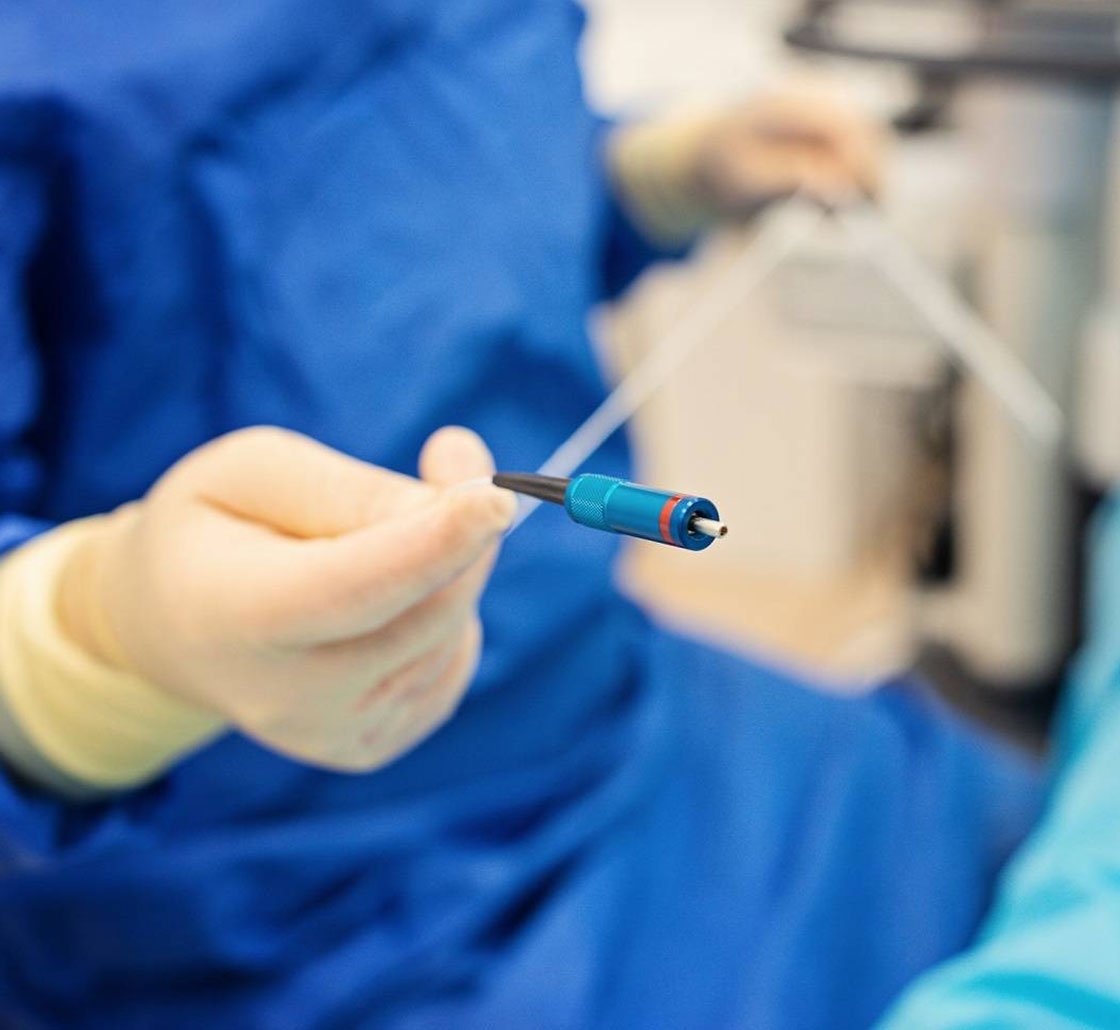
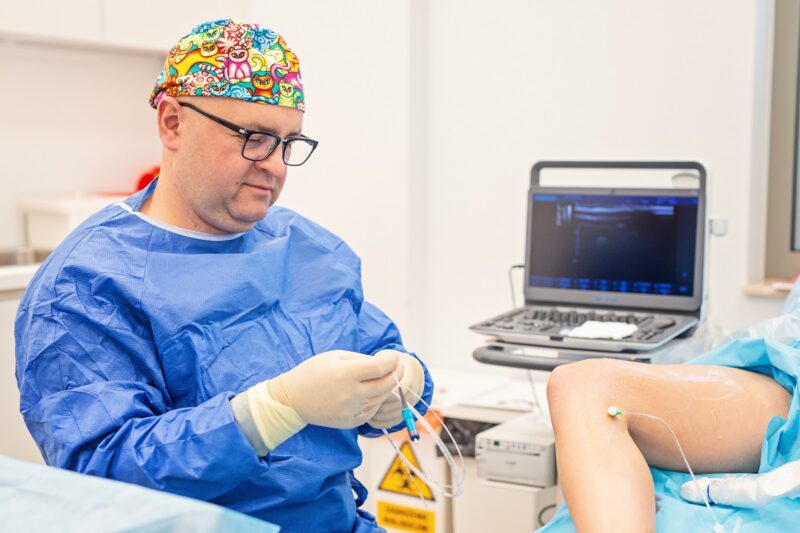
EVLT (endovenous laser treatment) is an effective and safe method of ablation. The method involves closing ineffective venous trunks with thermal energy generated by a laser. The optical fiber of the laser device is inserted into the vein through a skin puncture. The procedure is conducted under local anesthesia and the patient can return home immediately after the procedure.
Indications and preparing for surgical procedure
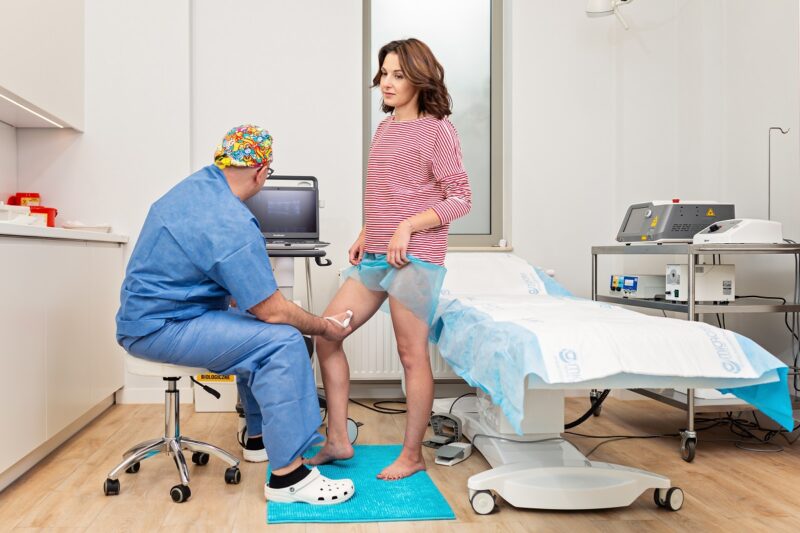
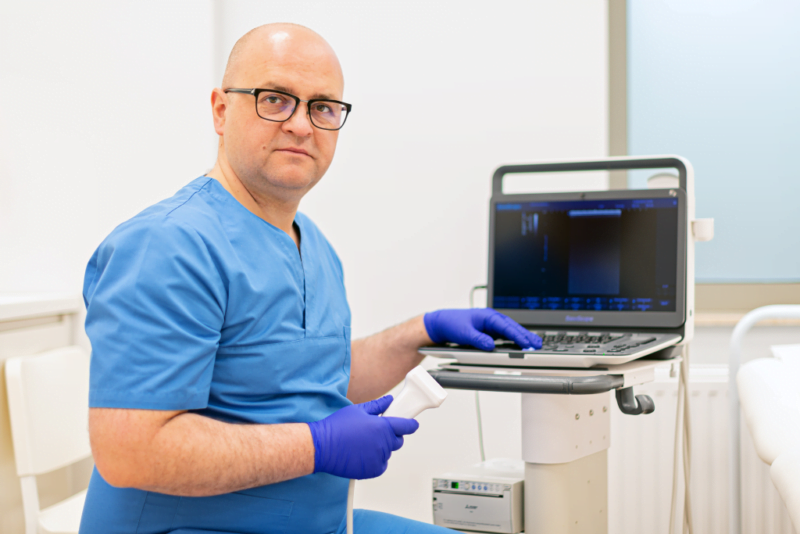
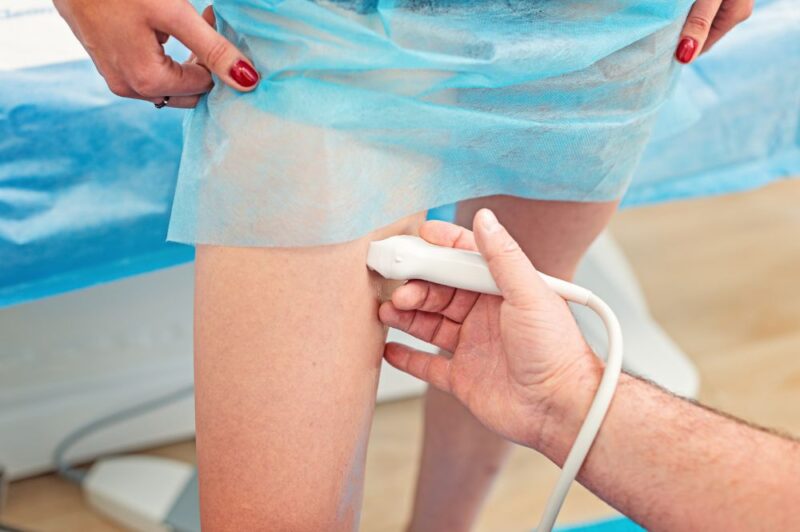
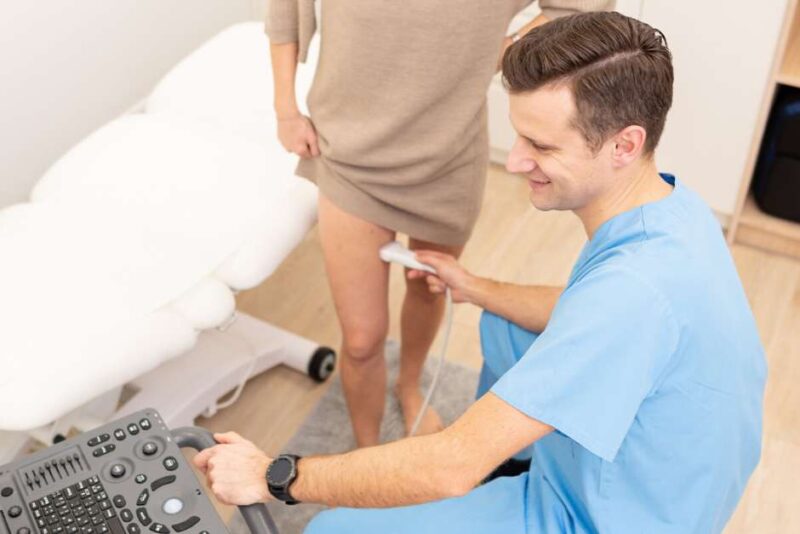
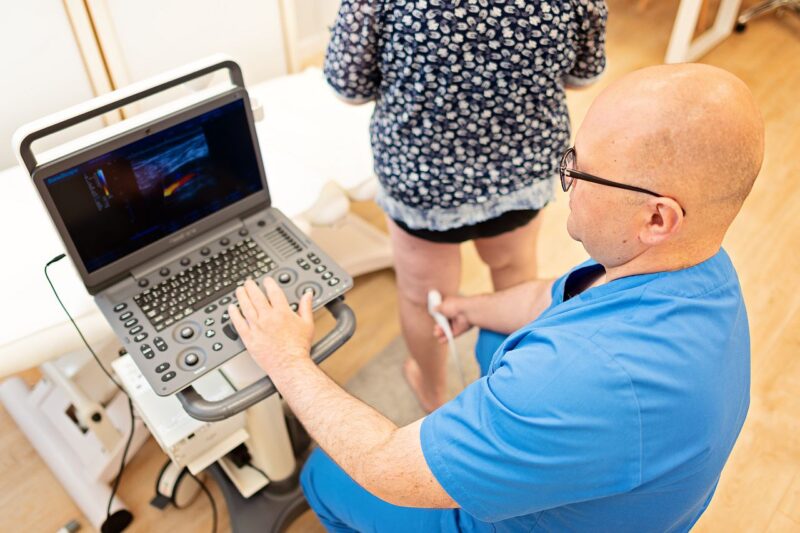
Before the EVLT procedure a duplex Doppler ultrasound of the lower limbs must be performed to qualify the patient. The indications for endovenous laser ablation include varicose veins in the legs, valvular incompetence in a superficial vein in the leg (great saphenous vein or small saphenous vein). The choice is also made based on the patient’s age, disease stage, and presence of coexisting diseases.
Before the procedure, blood tests must be performed: complete blood count, APTT and CRP levels, and the patient is required to wear compression stockings (class 1). The procedure is performed under local anesthesia, so the patient can eat and drink even just before the procedure.
The procedure
Upon disinfecting the limb with disinfectant solution and applying local anaesthetic, under ultrasound control, a small incision is made to the vein percutaneously, and a sterile single use radial fibre is inserted. The end of the fibre is put around the connection of the damaged superficial vein with the deep vein, where the reflux is. Then, through the skin incision a local anaesthetic solution is applied. Except for the pain relief, the solution is also supposed to protect the tissues surrounding the vein from laser thermal energy. Upon checking the position of the radial fibre, the closing of the vein will commence. The impulse work of the laser will allow to systematically pull out the radial fibre from the vein, to close it evenly. The position of the radial fibre is controlled during the entire procedure in the ultrasound. After the wire is removed from the vein, a sterile dressing is applied to the incision and a compression stocking will be put on the limb. Patient will be able to leave the operating table and after a short rest they will be able to leave the treatment room on their own.
Recommendations after treatment
preventive use of oral anticoagulants (for 10 days)
wearing a class 1 compression stocking for 24 hours after the procedure and then during the day for two weeks
follow-up visit 4 weeks after the operation (free of charge)
if the discomfort worsens, take pain relief drugs
it is not advised to drive a car directly after the treatment
Already on the next day the patient can come back to moderate physical activity (walks, climbing the stairs, work that does not require intense effort). They can return to exercise after 2-4 weeks. Follow up checks ups after the procedure are included in the price. The complications after this treatment happen rarely. Bruises can appear where the incisions were made.
Complications after the procedure are rare. Sometimes bruises may appear where the skin has been punctured.
Frequently asked questions
Does the EVLT procedure hurt?
Endovenous Laser Treatment (EVLT) for varicose veins is performed under local tumescent anesthesia, making the procedure virtually painless. Patients most commonly experience only mild discomfort or a feeling of pressure and stretching during the administration of the anesthetic.
How long does the EVLT procedure take?
The EVLT procedure typically lasts 60 to 120 minutes, depending on the severity and extent of the varicose veins, the number of veins treated, and whether one or both legs are being treated. It is a minimally invasive outpatient procedure, allowing patients to return home the same day.
Can I walk after the EVLT procedure?
Yes, walking after the EVLT procedure is not only permitted but strongly recommended. Patients leave the clinic unaided and are advised to take short walks shortly after treatment to promote blood circulation. This is one of the key advantages of modern endovenous laser treatment for varicose veins.
Is medical leave required after EVLT?
In most cases, prolonged medical leave is not necessary following EVLT. Most patients are able to resume daily activities and return to work within 1-2 days.
Can varicose veins come back after EVLT?
The vein treated during the EVLT procedure is permanently closed and does not reopen. However, chronic venous disease is a progressive condition, meaning new varicose veins may develop in other untreated vessels over time. This is why prevention and regular follow-up Doppler ultrasound examinations are so important.
How long do I need to wear compression stockings after EVLT?
After the EVLT procedure, it is recommended to wear medical-grade compression stockings for 2 weeks. Compression therapy supports the healing process, optimizes treatment results, and reduces the risk of complications. The exact duration and compression class are determined by your treating physician.
Is the EVLT procedure safe?
EVLT is a well-established and widely accepted method for treating venous insufficiency. Laser ablation of varicose veins offers high success rates and a low risk of complications, particularly when compared to traditional surgical vein stripping.
Can EVLT be performed in the summer?
Yes, the EVLT procedure can be safely performed during the summer. However, patients should follow post-procedure instructions, including consistent use of compression stockings and avoidance of prolonged sun exposure or intense heat during the recovery period.
Is Doppler ultrasound required for qualification?
Yes, qualification for EVLT is based on a detailed duplex Doppler ultrasound of the lower extremities. This essential imaging modality evaluates venous valve competence, identifies the source of reflux (great saphenous vein, small saphenous vein, or tributaries), and maps the anatomy to ensure precise treatment planning.
Does EVLT remove spider veins?
EVLT is intended for the treatment of large saphenous trunks and main sources of venous reflux. Smaller surface veins (spider veins and reticular veins) typically require complementary treatments such as sclerotherapy or transcutaneous laser therapy.
What are the contraindications to EVLT?
The main contraindications to EVLT include active venous thrombosis, skin infection at the treatment site, and severe uncontrolled systemic diseases. Each patient’s suitability is assessed individually during a specialist consultation.
How to schedule an EVLT procedure in Wrocław?
Contact our patient coordinators by phone or email to arrange a consultation and qualification for EVLT varicose vein treatment.
Sometimes, the EVLT procedure is performed with (or followed by) complementary treatments such as sclerotherapy, VeinOff, or Vasculaze. Combining various treatment methods is not only effective but allows to achieve a better cosmetic effect.
Sclerotherapy
Sclerotherapy is a method of vein closure with the use of a chemical sclerosant, which is a substance that once administered into the vessel causes swelling of the vascular wall and decrease in the flow, resulting in vessel fibrosis. The procedure is almost painless and anesthesia is usually not needed at all.
Vasculaze and Lumecca lasers are used for coagulation and closure of mild vascular lesions. During the procedure, a specially designed instrument head sends light impulses causing the blood vessels to disappear. Several procedures are necessary to achieve the desirable effect and the improvement in the treatment area is gradual.